I grow tropicals in a zone that has no business hosting them. Bananas, elephant ears, cannas taller than me. Every summer my backyard looks like it belongs somewhere near the equator, and every fall I haul half of it into the garage.
The trick is that "tropical" doesn't mean "impossible." It means you have to think about layering, microclimate, and timing. Most gardeners give up before they start because they assume tropicals need Florida weather year-round. They don't. They need warmth, moisture, and a plan.
If you don't live in a tropical climate, you can still pull this off. I'm going to walk through exactly how I build a tropical planting from the ground up, what plants actually perform, and what to do when winter comes knocking.

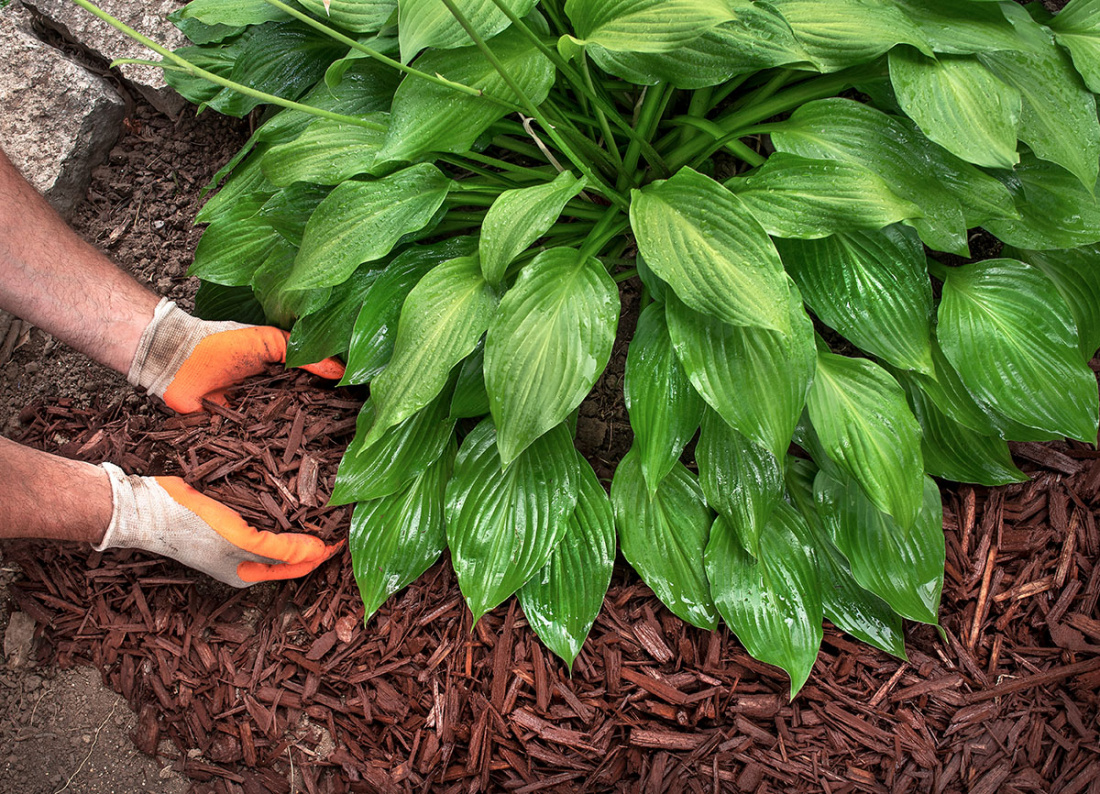
Build Your Green Foundation First
Every tropical planting starts with foliage, not flowers. Think of it like painting a room: green is your base coat. The flowers come later.
Big leaves are the whole game here. A single elephant ear does more visual work than a dozen petunias. You want plants that make people stop and look. Oversized foliage tricks the eye into reading "jungle" even in a suburban lot.
Layer aggressively. Tall palms or bananas in the back. Mid-height philodendrons and ligularia in the middle. Low ferns and hostas at the edges. This stacking creates depth, which is what separates a tropical bed from a random collection of plants sitting next to each other.
My go-to foliage plants for building that base:
- Elephant Ears (Colocasia or Alocasia)
- Philodendrons
- Gunnera
- Ligularia
- Palms (Sago, Chinese Fan, and Majesty are the most cold-tolerant)
- Ferns (especially tree ferns if your climate allows it)
- Hostas
Get these established before worrying about anything else. The foliage is the skeleton of the whole design.
Add Vines and Texture
A flat wall of green leaves isn't a jungle. Real tropical landscapes have vertical movement. Vines climbing fences, bamboo screening the property line, woody stems breaking up the leaf shapes.
Bamboo is my favorite structural plant for this. It grows fast, screens neighbors, and the sound of wind through bamboo canes is distinctly tropical. One warning: plant clumping varieties only. Running bamboo will invade your entire yard and your neighbor's too.
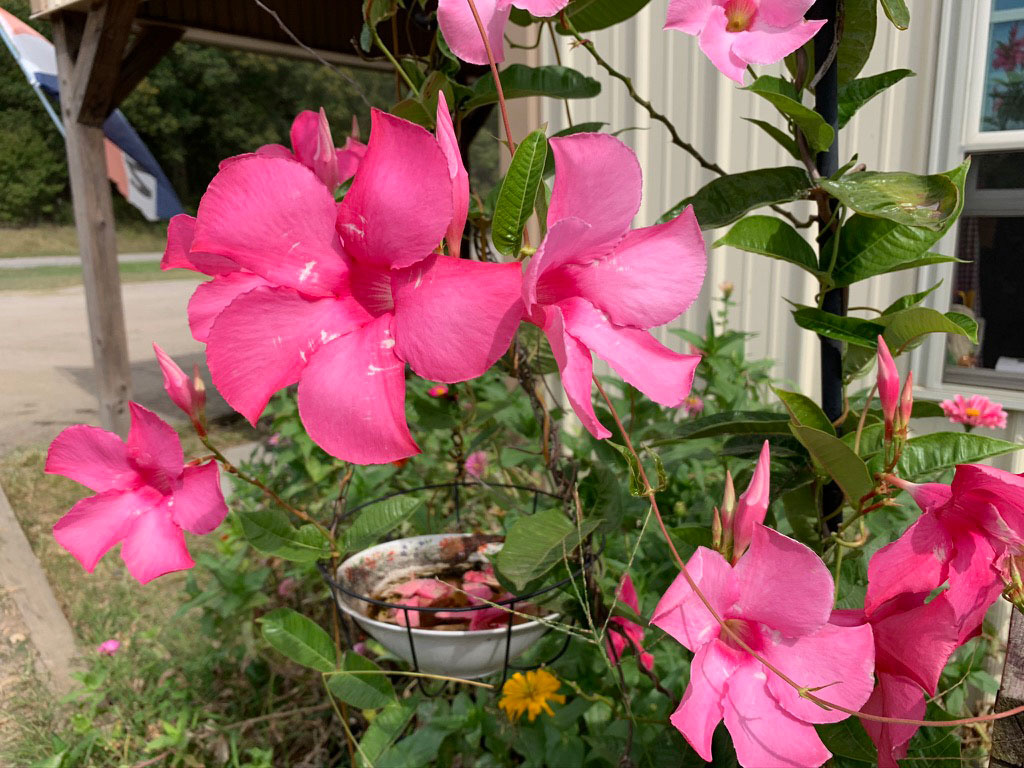
Vines do the vertical work. Train bougainvillea over an arbor, let jasmine cascade down a wall, or run mandevilla up a post. They pull the eye upward and fill empty vertical space that foliage plants can't reach.
The vines I rely on:
- Bougainvillea
- Jasmine
- Mandevilla
Each of these blooms, which means you get structure and color from the same plant. Jasmine also fills the yard with fragrance on warm evenings.
Bring in Color With Tropical Bloomers
Once your green foundation is solid, you earn the right to add flowers. This is where most people start, and it's why their tropical beds look scattered. Color without structure is just noise.
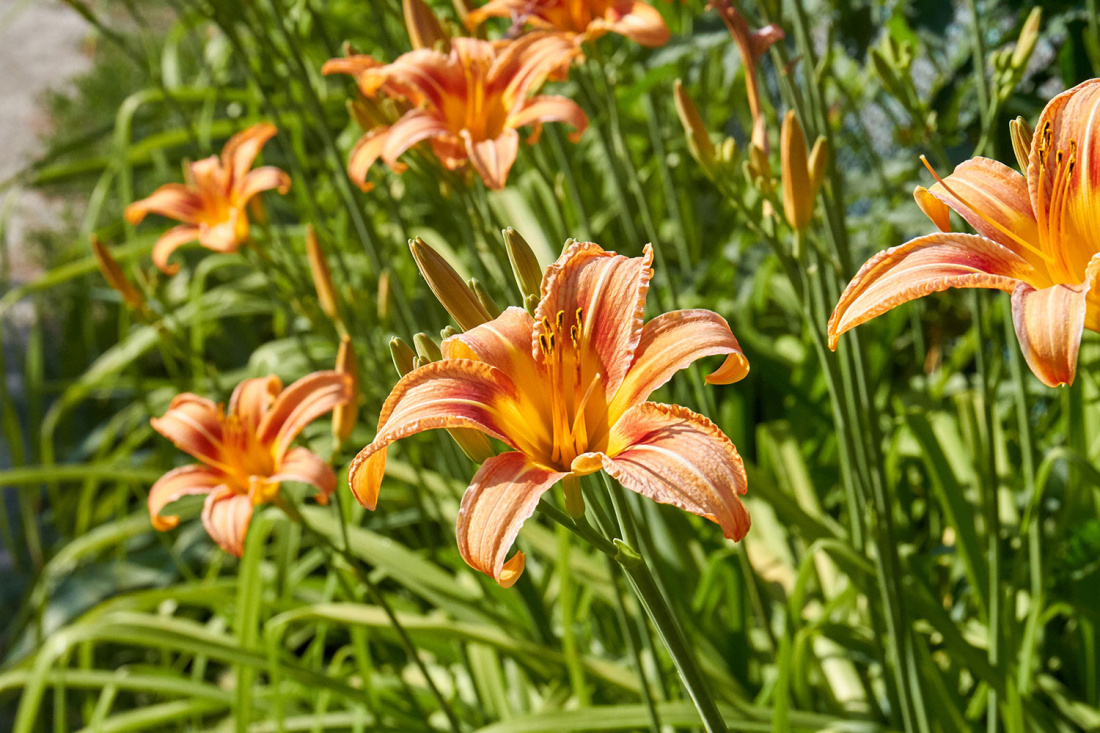
With the layered green backdrop in place, even a few tropical flowers will punch hard. Bright oranges, deep purples, hot pinks. They read like jewels against all that foliage.
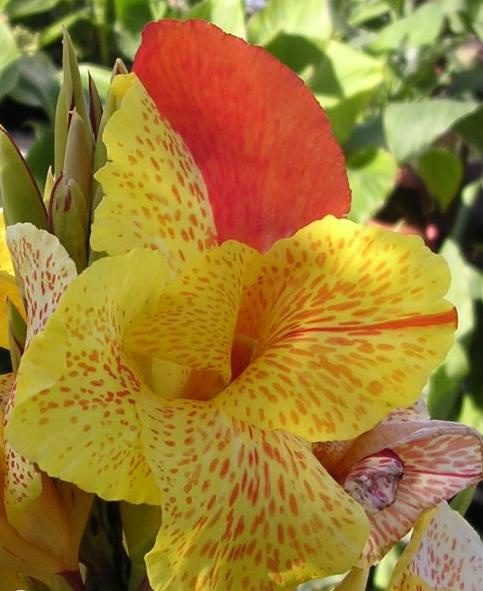
I plant bold colors in clusters, not sprinkled around. Three cannas together hit harder than three cannas spread across the yard. Group by color, and let the green do the separation work.
Flowering tropicals that perform well for me:
- Cannas (my personal favorite for sheer impact)
- Plumeria
- Orchids (outdoor-hardy varieties like Bletilla)
- Alstroemeria
- Callas
- Pineapple Lilies
- Japanese Iris
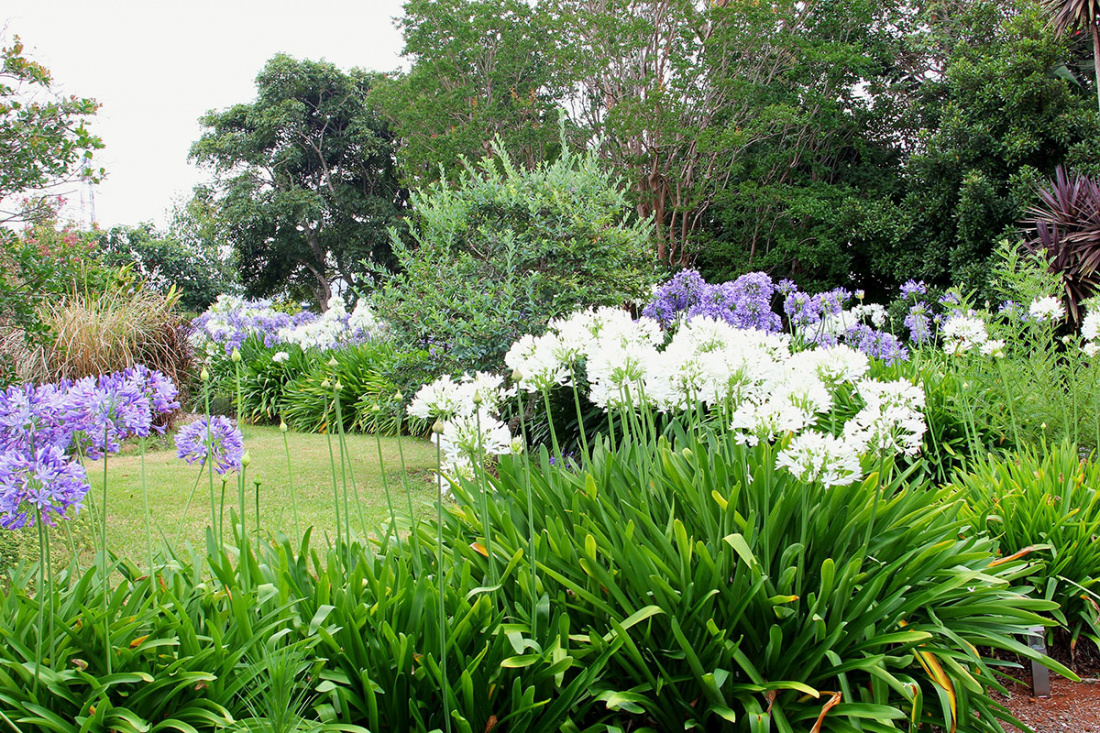
- Agapanthus
- Begonias
- Lily of the Valley
Start with two or three varieties and mass-plant them. You can always expand next season.
Finish the Scene With Hardscape and Lighting
Plants do 80% of the work. The last 20% is atmosphere. A small recirculating water feature changes the entire feel of a garden. Moving water sounds tropical. Still air doesn't.
String lights on a warm setting turn a backyard planting into somewhere you actually want to sit after dark. I hang mine between posts at about eight feet. Low enough to feel enclosed, high enough not to hit your head.
Get comfortable seating in there. The whole point of building this space is using it. A chair tucked among the cannas and elephant ears, with a water feature gurgling nearby, is a different experience than looking at the garden from the patio.
Keeping Tropicals Alive Long-Term
Tropicals are thirsty. That is the single biggest maintenance reality. These plants evolved in places where it rains every afternoon. If you're in a drier climate, water deeply and often. Mulch heavily to hold moisture in the soil.
Humidity matters too. Grouping tropical plants close together creates a microclimate where they share moisture through transpiration. Isolated plants dry out faster than clustered ones.
Cold climates require a winter strategy. I overwinter my tropicals by digging up bulbs, moving containers into the garage, and mulching anything that stays in the ground. The first frost will kill unprotected tropical foliage overnight. Have your plan ready before temperatures drop.
Feed regularly during the growing season. Tropicals are heavy feeders. A balanced slow-release fertilizer in spring, supplemented with liquid feeds every few weeks through summer, keeps them pushing growth.
The Tropical Backyard Is a System, Not a Shopping List
The mistake most people make is buying a cart full of tropical plants and scattering them around the yard. That gives you a plant collection, not a tropical garden.
Think in layers. Green foundation first. Texture and vertical elements second. Color third. Hardscape and lighting last. Each layer builds on the one before it.
Your climate is a constraint, not a disqualification. I garden in a zone where frost is guaranteed, and I still grow bananas every year. The plants don't care where you live. They care about moisture, warmth, and soil. Give them what they need during the growing season, protect them in winter, and they'll reward you with a yard that feels like a different continent.
Start small. A single bed with layered foliage, a few cannas, and one vine is enough to prove the concept. Expand from there once you see what works in your specific conditions.
Frequently Asked Questions
Can I grow tropical plants if I live in a cold climate?
Yes. I do it every year. The key is treating tropicals as seasonal performers and having a winter plan. Dig up bulbs and tubers in fall, move container plants indoors, and mulch heavily over anything that stays in the ground. Many tropicals like cannas, elephant ears, and bananas can be stored dormant in a cool garage through winter and replanted after the last frost.
How much water do tropical plants actually need?
More than you think. Most tropicals evolved in environments with daily rainfall. I water my tropical beds deeply every two to three days during hot weather, and I mulch with three to four inches of organic material to slow evaporation. Wilting leaves and brown edges are almost always a watering problem, not a disease.
What are the easiest tropical plants for beginners?
Cannas, elephant ears, and hostas. All three are hard to kill, grow fast enough to be satisfying in your first season, and give you that oversized tropical leaf look without fussy care requirements. Cannas especially will forgive almost any mistake short of frost exposure.
Do tropical plants need full sun?
It depends on the plant. Cannas and plumeria want full sun, six or more hours daily. Hostas, ferns, and many philodendrons prefer shade or dappled light. This actually works in your favor when layering. Plant sun-lovers in the open areas and shade-tolerant species underneath the canopy of taller plants.
How do I keep my tropical garden from looking cluttered?
Plant in masses, not singles. Three of the same plant grouped together reads as intentional design. One of everything reads as a plant collection. Stick to a limited color palette for flowers, and let the green foliage do the heavy lifting. White space (or rather, green space) between color groupings keeps the eye moving instead of overwhelming it.