When you are designing outdoor spaces like your lawn, path or driveway, the borders and edging can be used to add detailing that creates a flow to the overall aesthetic. While a driveway can be lined with bricks, stones, plastic or metallic elements, there are many benefits to planting a living lining that can refresh the look of the whole house and keep it from looking stark and inorganic.
If you are interested in adding color as well as character to your outdoor lawn, path or driveway, foliage plants might be the best option for you. Foliage plants have colorful and decorative leaves, which is why they make for a beautiful addition to the collection of any gardening enthusiast. They have an advantage over flowering plants as they stay colorful for longer and may even change colors throughout the year.

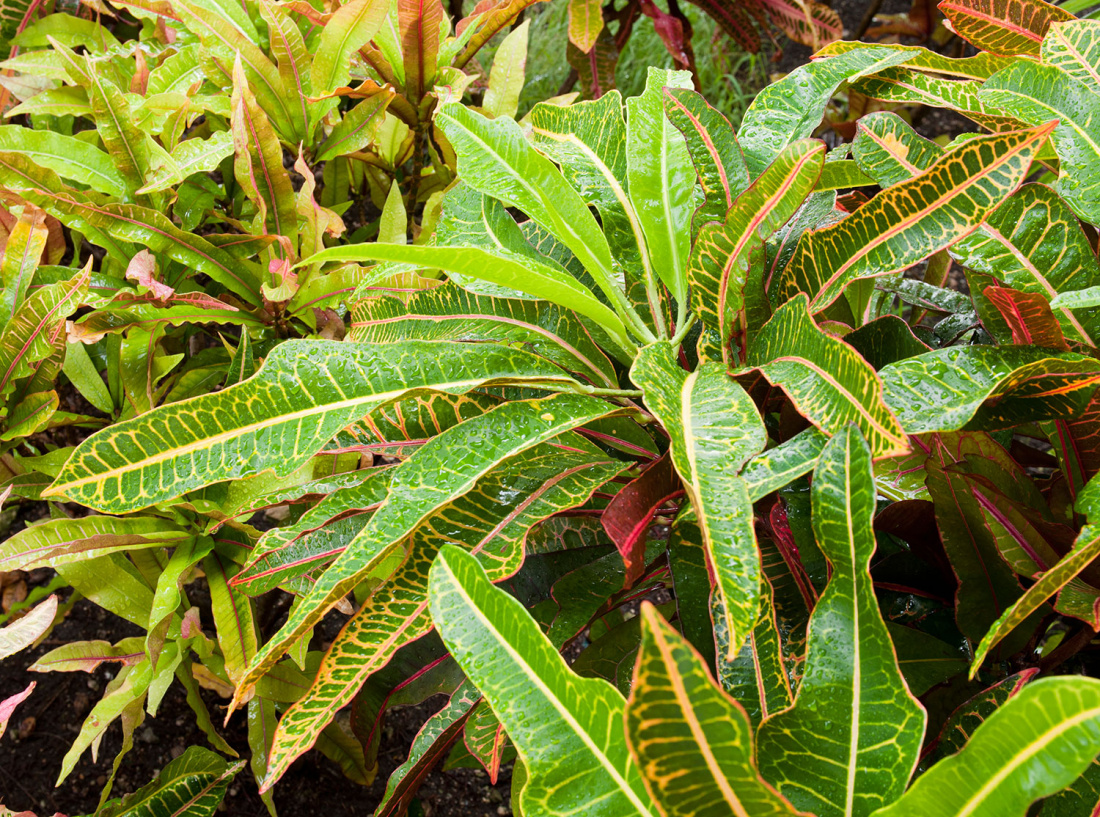
Reasons to Choose Foliage Plants
The term “foliage plant” is a broad classification that includes a variety of plants that are grown for their interesting leaves. Many foliage plants used to be kept indoors only, but to our delight, their sun-loving varieties have been created. Lining lawns with foliage plants will add contrast to the greenery in your yard and break the monotony. Some are experts at air purification, some will easily grow in the shade of a wall or fence and others stay colorful throughout the year. If chosen correctly according to your soil quality and climate, these plants will surely become your pride and joy.
7 Foliage Plants to Line Your Path
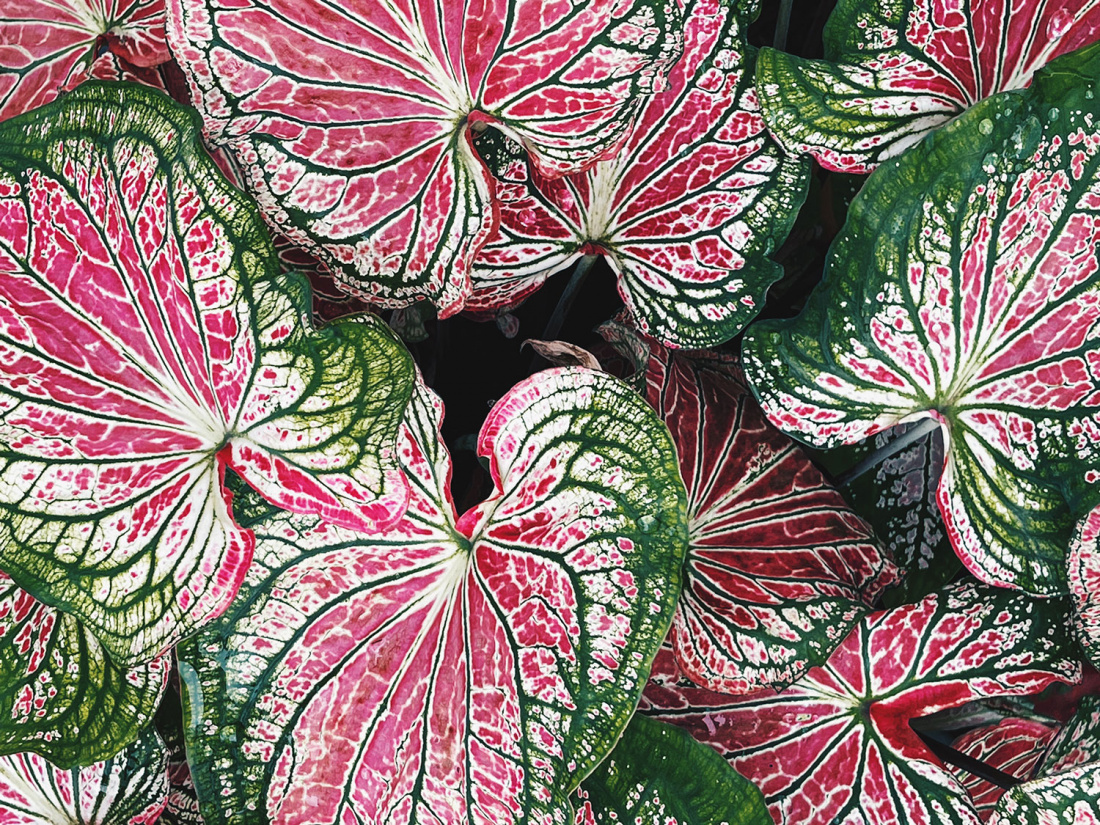
Caladium
Caladium is a great choice for areas that receive some shade or dappled sunlight, such as a shady bed next to a wall. It usually has bright pink veins and stems, but it can have foliage splashed with shades of white, red, green and chartreuse so it adds a pop of color wherever it is planted. Caladiums should not be planted in areas of harsh, prolonged sunlight exposure.
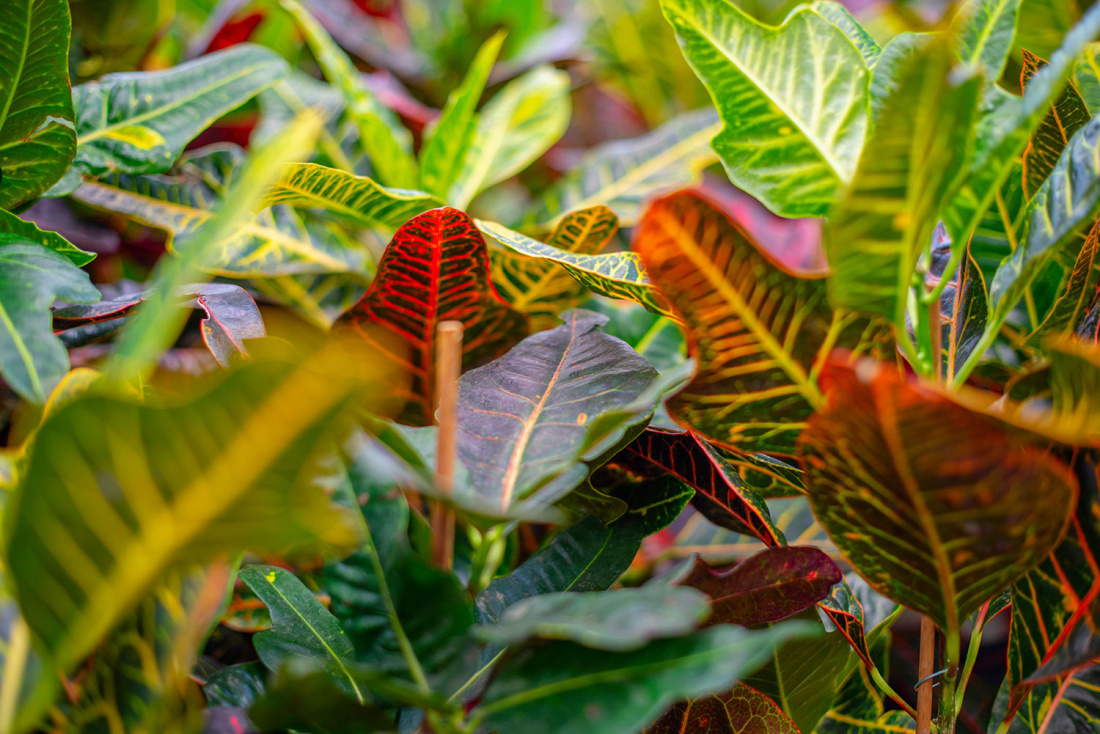
Croton
Croton is a popular choice for landscaping and is tough to beat when it comes to adding color to any space. Another added benefit is that it has air-purifying quality. They grow well in hot and humid climates. Its widely variegated leaves are often more scarlet, red and orange than green. Due to this variegation, its leaves contain less chlorophyll, which is why they thrive in ample direct sunlight. One warning: croton sap is toxic. Keep it away from pets and small children.
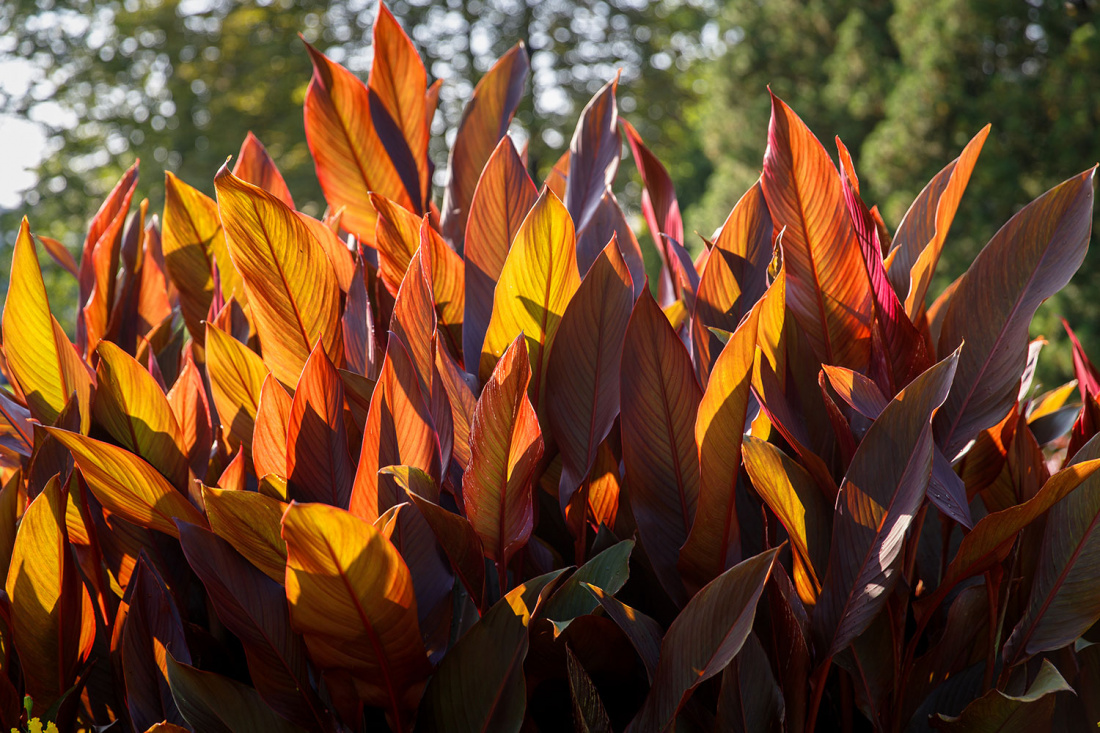
Canna (canna indica)
Canna plants add a dramatic flair to any space where they are planted. Their big, banana-like leaves can be striped with deep hues of red, orange and yellow between the green. Cannas produce the most beautiful blooms in late spring, but even without the flowers, there is no shortage of color in a canna plant. They require heat, a lot of sunlight and fertile soil, but they are not difficult to take care of once these conditions are met.
Coleus (coleus blumei)
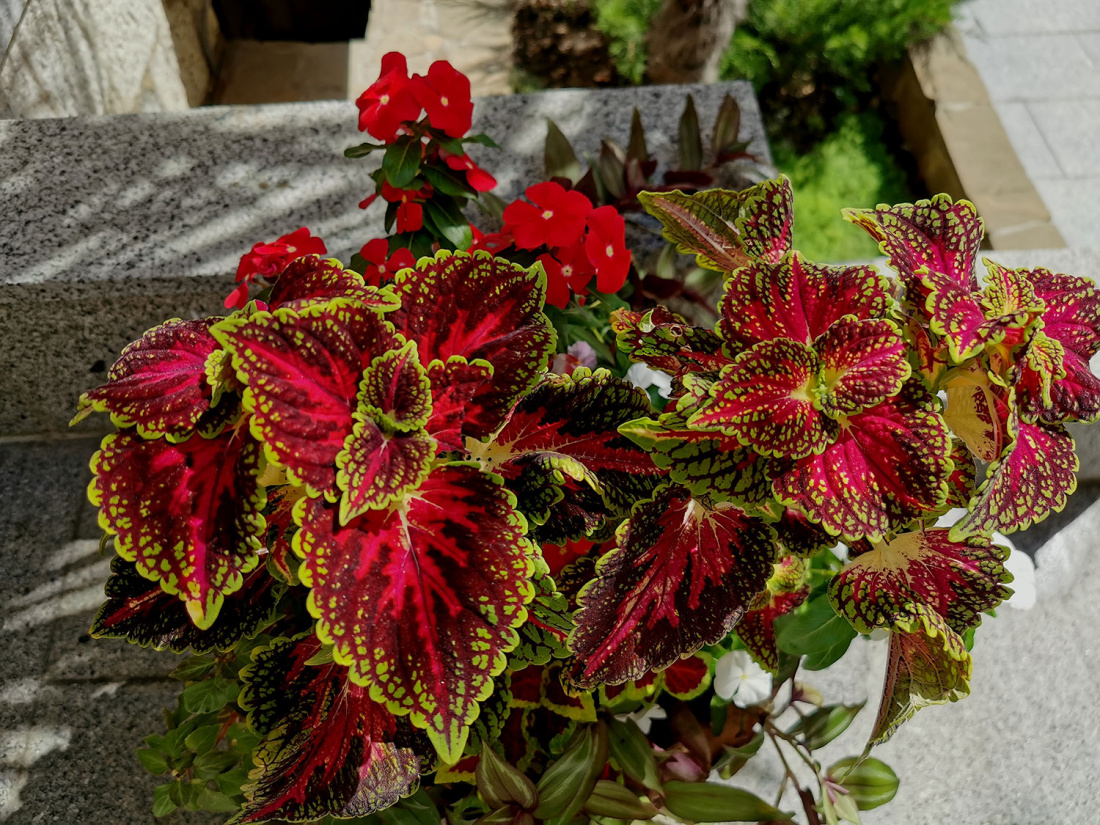
Coleus is another foliage plant that has made its way into the hearts of gardeners everywhere due to its refreshing coloring and the brightness it can bring into any lawn. Its foliage comes in shades of pink, maroon, red, green and yellow. These plants are easy to take care of so they are recommended for people who have just started taking an interest in gardening, but many seasoned gardeners also love these plants. Coleus is available in shade-loving and sun-loving varieties so you can buy the perfect coleus plant to complement a bright, sunny border or an area with dappled sunlight.
Heuchera
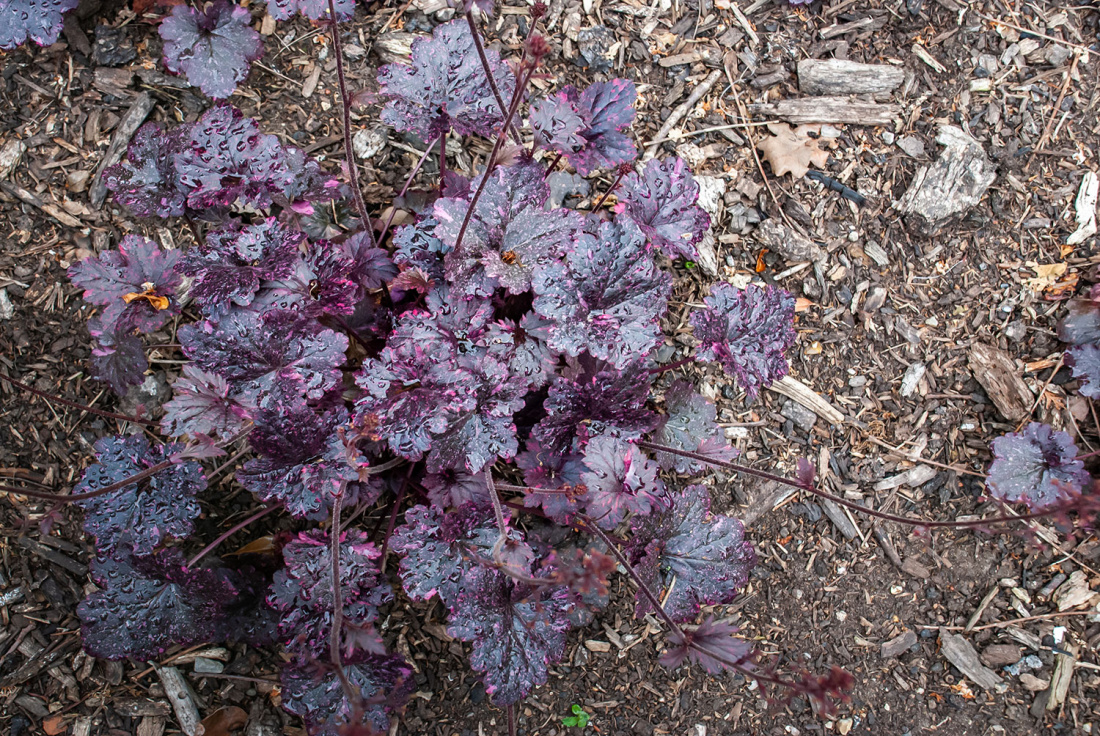
Heucheras, also known as coral bells, is another attractive choice for edging borders. This plant is available in a spectrum of colors that goes from dark green to deep purple to a beautiful salmon and more. It has large, rounded or heart-shaped leaves that are often variegated and ruffled. This low-maintenance plant produces clusters of bell-shaped flowers in late spring through the summers and an added benefit of planting Heuchera is that its blooms attract hummingbirds. Coral bells prefer partial sunlight, but some cultivars can grow in direct sunlight as well. The Heuchera plant requires frequent watering in its first year. After that, it needs very little care.
Ornamental Grasses
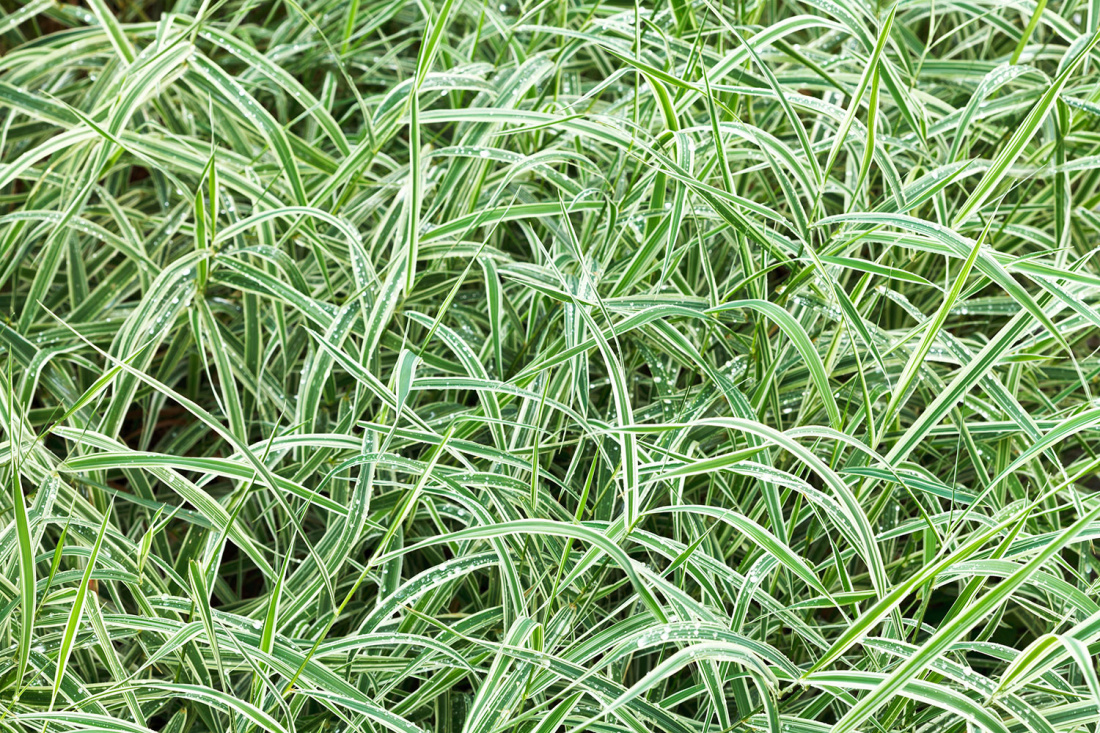
Ornamental grasses can be found in evergreen, cool-season and warm-season varieties. On their own, these grasses lend movement, color and whimsy to a garden path, and when artfully planted in combination with bright foliage plants, these can help create your own lush, tropical paradise. It is no surprise that these grasses have skyrocketed in popularity in recent years. There are many types of ornamental grasses, but it is advised to grow the ones that are native to your area since they will be easier to nurture, will help further the biodiversity of your lawn and eliminate the risk of introducing an invasive species into the environment. Native prairie grasses are drought-resistant and can almost always survive without being watered, so these are the perfect choice for water shortage areas.

Dusty Miller
Dusty miller sports ethereal foliage that draws attention and brings out the color in anything that grows around it. This plant is extremely drought-resistant and can thrive in many tough gardening conditions, such as acidic soil or sandy loam. This evergreen plant tolerates frost and will keep your path, driveway or other borders beautiful all through the year.
Mix any of these foliage plants into your existing borders to bring year-round color to paths and driveways. Just match each plant to your climate and soil. Outdoor border plants face every season head-on, so picking species suited to your region saves water, effort and replacement costs.
Frequently Asked Questions
What are the best low-maintenance foliage plants for lining a path?
Heuchera (coral bells) and dusty miller are hard to beat. Both tolerate neglect, need minimal watering once established and keep their color without constant pruning. Ornamental native grasses are another strong pick if you want something you can basically ignore after planting.
Which foliage plants work in shade versus full sun?
Caladiums and shade-loving coleus varieties thrive in dappled light or partial shade. Crotons and cannas want direct, prolonged sun. Heuchera splits the difference and handles both partial shade and moderate sun depending on the cultivar.
How far apart should I space foliage plants along a walkway?
It depends on the mature spread of the plant. Compact varieties like coleus and dusty miller do well at 8 to 12 inches apart. Larger plants like cannas and ornamental grasses need 18 to 24 inches. Plant a little tighter than the tag suggests if you want a filled-in border within the first season.
Can I get year-round color from foliage plants alone?
Yes, if you layer your choices. Dusty miller is evergreen and handles frost. Heuchera holds its leaves through winter in most zones. Pair those with warm-season performers like crotons and cannas, and your border stays colorful in every month.